
Finding the best budget microphones is not just about price. It is about finding a microphone that works in the real world. Not a padded, acoustically treated studio. Not a quiet apartment in a city with reliable power. A real home setup, with background noise, traffic outside, maybe a generator humming, and no soundproofing on the walls.
That is the reality for most vocalists and podcasters recording at home. And it shapes everything about which microphone you should buy.
I record using an Audio-Technica mic in an untreated room. No foam panels, no reflection filter, no vocal booth. Just careful mic placement, the right settings, and a microphone that suits the environment. In this guide I will share what I have learned. And recommend the best budget microphones under $300 that genuinely perform in real home recording conditions.
Whether you are laying down vocals for a track, recording a podcast, streaming, or creating YouTube content, there is a mic on this list for you.
What “Budget” Actually Means in 2026
Budget does not mean bad. The microphones on this list sit between $50 and $300, a range that five years ago would have bought you mid-tier gear. But today delivers genuinely professional results thanks to how far manufacturing quality has come.
At the lower end of this range you will find solid USB microphones that plug straight into your laptop with no extra equipment needed. At the higher end, XLR condenser microphones that rival gear costing twice as much just a few years ago.
The price you pay is not the whole picture though. If you choose an XLR microphone, you will also need an audio interface. An audio interface a separate piece of hardware that powers and connects the mic to your computer. That adds $50–150 to your total cost. I have noted the interface requirement clearly for every XLR mic on this list. And you can find my full guide to budget audio interfaces to pair with your choice.
The Home Studio Problem and How to Pick Around It
Before the list, this is worth addressing directly because it changes which microphone you should buy.
Recording in a typical home environment means dealing with:
Background noise. Traffic, neighbours, animals, wind — a sensitive condenser microphone will pick all of it up. In a quiet, treated room a condenser sounds incredible. In a noisy environment it can sound worse than a cheaper dynamic mic.
No soundproofing. Without acoustic treatment, your room adds echo and “room sound” to every recording. Some microphones handle this better than others.
Generator hum and electrical interference. Generator-powered electricity can introduce a low-frequency hum into recordings, particularly through cheaper audio interfaces. Grounding and shielding matter.
What this means for your mic choice: If your recording environment is noisy or untreated, a dynamic microphone will serve you better than a condenser. Dynamic mics are less sensitive; they reject background noise and room echo more effectively. Condenser mics capture more detail, but in a noisy room that detail works against you.
I have flagged each microphone below with a Room Friendliness note to guide you.
The Best Budget Microphones in 2026
1. Audio-Technica AT2035 (Best Overall XLR Condenser)
Price: around $159 (Inc. Custom Shock Mount) | Type: XLR Condenser | Needs interface: Yes
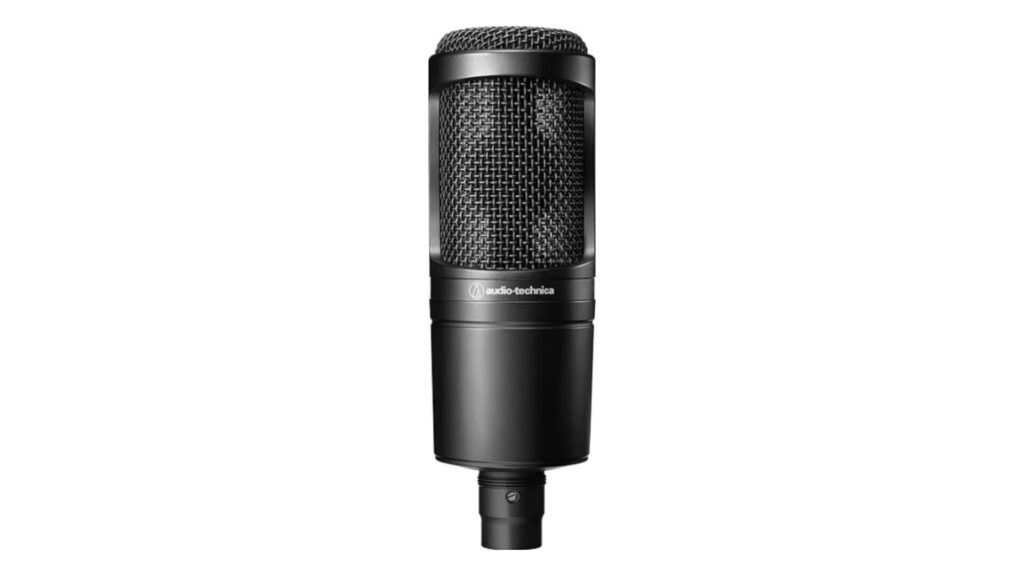
The AT2035 is my personal starting point for this list. The Audio-Technica condenser I use in my own untreated room has shown me both what a good budget condenser can do. And where its limits are when the environment is not ideal.
The AT2035 delivers clear, detailed sound with a natural warmth that suits both vocals and spoken word. Its cardioid polar pattern focuses on sound directly in front of it and rejects a reasonable amount of side and rear noise. It also has a built-in high-pass filter (a switch on the body) that cuts low-frequency rumble, useful for reducing generator hum and desk vibrations.
That said, in a genuinely noisy or reverberant room, you will hear the room in your recordings. Use it with careful mic placement, close to your mouth, with your back to the noisiest part of the room — and the results are excellent for the price.
- Best for: Vocalists and podcasters with a reasonably quiet room or some basic treatment (even a wardrobe full of clothes works).
- Room friendliness: Good in quiet rooms, challenging in noisy ones.
- Interface needed: Yes.
2. Shure SM58 (Best Dynamic Mic for Noisy Environments)
Price: around ~$99 | Type: XLR Dynamic | Needs interface: Yes

If your recording environment is noisy, the Shure SM58 is the most honest recommendation on this list. It is the most used vocal microphone in the world, on live stages, in radio studios, and in home setups where background noise is a real problem.
The SM58 is a dynamic microphone, which means it is far less sensitive than a condenser. It focuses tightly on what is directly in front of it and rejects almost everything else. Generator hum, traffic noise, air conditioning, the SM58 shrugs off all of it in a way that even excellent condenser mics cannot.
The trade-off is that it captures less fine detail than a condenser. Vocals through an SM58 sound present and controlled rather than airy and detailed. For podcasting and spoken word that is often a feature, not a bug. The voice sits forward and clear without room noise muddying it up.
For vocalists recording music in noisy conditions, the SM58 delivers a sound that professional engineers have worked with for decades and know how to make shine in a mix.
- Best for: Vocalists and podcasters in noisy or untreated rooms. Also excellent for live performance double duty.
- Room friendliness: Handles almost any environment.
- Interface needed: Yes.
3. Samson Q9U (Best for Podcasters Starting Out)
Price: about ~$99 | Type: USB and XLR Dynamic | Needs interface: No (USB) or Yes (XLR)

The Samson Q9U is one of the most practical microphones on this list. It is a dynamic microphone, so it handles noise and untreated rooms well, but it connects via both USB and XLR. That means you can plug it straight into your laptop today, and upgrade to an audio interface later without buying a new microphone.
For podcasters specifically, this flexibility is difficult to beat at around $99. The USB audio quality is clean and clear, the dynamic capsule keeps background noise and generator hum under control, and the built-in headphone jack with zero-latency monitoring lets you hear your voice in real time as you record — something many budget mics at this price skip entirely.
The broadcast-style dynamic capsule gives voices a warm, full presence that suits both podcast conversation and spoken word content. Streamers and YouTubers recording commentary or voiceovers will find this equally well suited to their needs.
- Best for: Podcasters, streamers, and YouTubers who want a plug-and-play start with room to grow into XLR later.
- Room friendliness: Dynamic capsule handles noisy, untreated rooms well.
- Interface needed: No for USB. Optional XLR for upgraded quality later.
4. RØDE NT1 – 5th Generation (Best High-End Budget Condenser)
Price: around ~$229 (Inc. Shock Mount & Pop Filter Included – Music Production, Vocal Recording, Podcasting – Black – Professional Audio) | Type: USB and XLR Condenser | Needs interface: No (USB) or Yes (XLR)
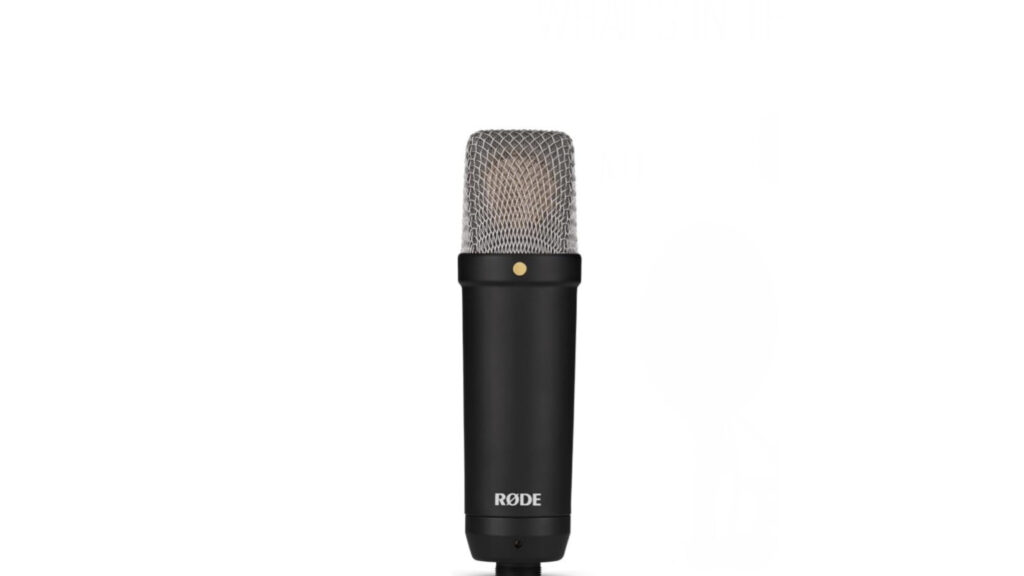
The RØDE NT1 has been a home studio favourite for years. And the 5th generation adds USB connectivity to the classic XLR design, making it more accessible for those not yet ready to invest in an interface.
Its self-noise rating of 4.5 dBA is exceptionally low, meaning the mic itself adds almost nothing to your recording. For vocalists chasing the cleanest possible sound at this price point, that matters. The cardioid pattern captures rich, detailed vocals with a natural brightness that sits well in a mix without heavy EQ work.
The honest caveat is the same as any sensitive condenser: in a noisy or reverberant room, that sensitivity works against you. The NT1 rewards a controlled environment. If you can record in a treated corner, or at least late at night when ambient noise drops, the NT1 will genuinely impress you at this price.
It comes with a shock mount and pop filter in the kit, which saves you an extra purchase.
- Best for: Vocalists serious about audio quality who have or can create a reasonably quiet recording space.
- Room friendliness: Excellent in quiet rooms, exposed in noisy ones.
- Interface needed: No, for USB. XLR for best quality.
5. Samson Q2U (Best Budget Pick)
Price: around ~$99 | Type: USB and XLR Dynamic | Needs interface: No (USB) or Yes (XLR)
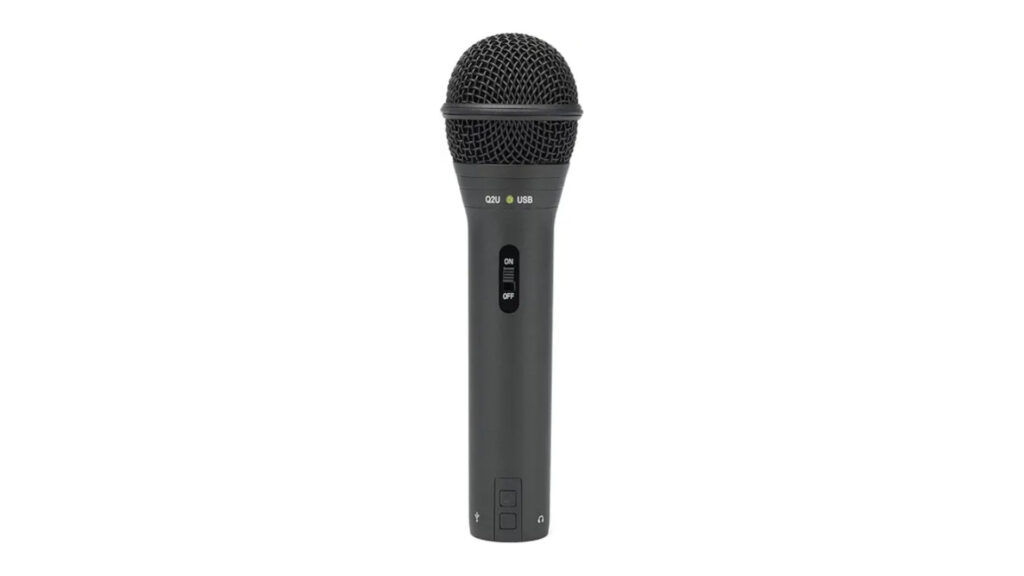
If $79 for the ATR2100x is still a stretch, the Samson Q2U delivers nearly the same concept (USB and XLR dynamic microphone) for around $59. It is the most accessible entry point on this list without sacrificing noise rejection, plug-and-play simplicity, and upgrade flexibility.
Audio quality is not as refined as the AT options above. But for a first microphone used for podcasting, voiceovers, or casual streaming it is more than sufficient. Many creators start here and stay longer than they expected to.
- Best for: Podcasters and streamers on a tight budget who want to start recording now.
- Room friendliness: Dynamic, handles noise well.
- Interface needed: No, for USB. XLR optional.
6. Audio-Technica AT2020 (Best Entry XLR Condenser)
Price: around ~$149 (inc. XLR Cable, Microphone Arm, Pop Filter, Cleaning Cloth) | Type: XLR Condenser | Needs interface: Yes
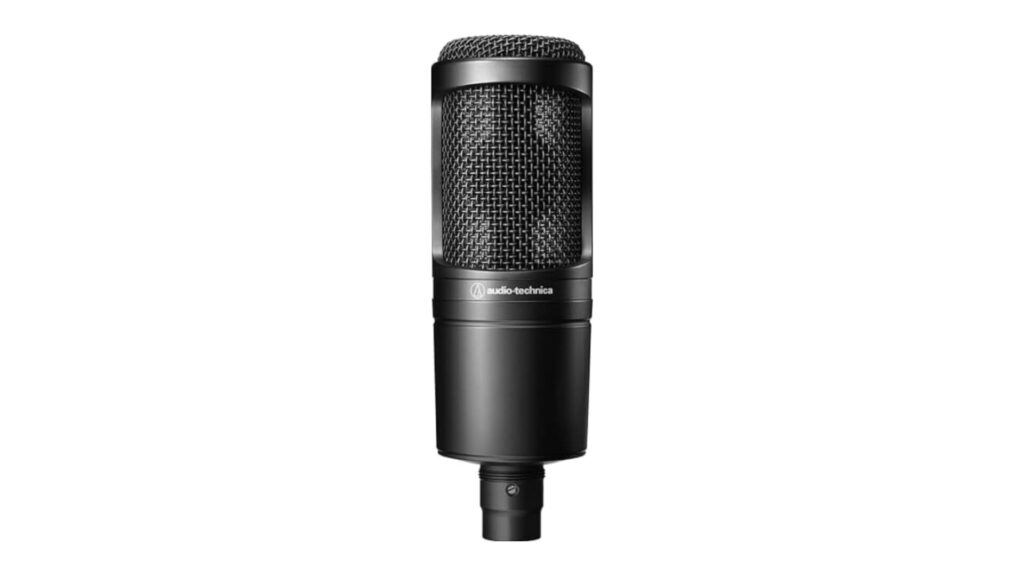
The AT2020 is one of the most recommended budget condenser microphones in the world, and for good reason. At around $99 it delivers a neutral, balanced sound that works well for vocals, acoustic instruments, and spoken word without colouring the recording too heavily.
It sits a step below the AT2035 in terms of features. No high-pass filter switch, no pad — but the core sound quality is very close. If your budget is closer to $100 than $150 and you have a reasonably quiet room, the AT2020 is a reliable, well-proven choice.
- Best for: Vocalists and podcasters wanting a condenser on a tighter budget, with a quiet recording environment.
- Room friendliness: Good in quiet rooms, picks up noise in untreated spaces.
- Interface needed: Yes
Quick Comparison
Which Mic Is Right for You?
| Microphone | Price | Type | USB? | Best For | Noisy Room? |
|---|---|---|---|---|---|
| Audio-Technica AT2035 | ~$159 | XLR Condenser | No | Vocals, podcasting | Moderate |
| Shure SM58 | ~$99 | XLR Dynamic | No | Vocals, noisy rooms | Excellent |
| Samson Q9U | ~$99 | USB+XLR Dynamic | Yes | Podcasters, streamers | Excellent |
| RØDE NT1 (5th Gen) | ~$229 | USB+XLR Condenser | Yes | Serious vocalists | Moderate |
| Samson Q2U | ~$99 | USB+XLR Dynamic | Yes | Beginners, podcasters | Excellent |
| Audio-Technica AT2020 | ~$149 | XLR Condenser | No | Vocals, budget condenser | Moderate |
What Else You Need to Start Recording
A microphone is only part of your setup. Depending on what you choose from this list, here is what else you will need:
Audio interface (for XLR mics): Required for the AT2035, SM58, and AT2020. Converts the XLR signal to USB for your computer. Budget around $50–100 for a solid entry-level option.
Microphone stand or arm: Essential for consistent placement and reducing handling noise. A basic desk stand costs around $15–20. A boom arm gives more flexibility for around $25–40.
Pop filter: Reduces plosive sounds (the “P” and “B” bursts that distort recordings). Often included with higher-end mics like the NT1. Inexpensive standalone options cost $10–15.
Acoustic treatment (optional but helpful): You do not need professional panels. Recording inside a wardrobe surrounded by hanging clothes works surprisingly well. Heavy curtains, bookshelves full of books, and soft furnishings all absorb echo. Position yourself with your back to the quietest wall in the room.
Final Thoughts
The best budget microphone for you is not necessarily the most expensive one on this list. It is the one that fits your environment, your use case, and your current setup.
If you are recording in a noisy or untreated space, start with a dynamic microphone like the Shure SM58 or the Samson Q9U. They will give you cleaner recordings in real-world conditions than a sensitive condenser that picks up everything in the room.
If your space is reasonably controlled, or you are willing to create a simple DIY treatment corner, a condenser like the AT2035 or RØDE NT1 will reward you with a richness and detail that makes vocals and spoken word genuinely shine.
Either way, the mics on this list represent the best value available at their price points in 2026. Start recording, learn your space, and upgrade when the music or the content demands it.
Disclosure: This post contains affiliate links. If you purchase through these links, I may earn a small commission at no extra cost to you. Prices listed are approximate and may vary.